Skip to header Skip to main navigation Skip to main content Skip to footer
Home
American Falls Dam

Main navigation

  • Home
  • Articles
  • Business Directory
  • Dining
  • History
  • Lodging
  • Outdoors
  • Shopping
  • Things to Do
  • Weather
  • Webcams

Articles

Parting of the Ways: Where the Wagons Said Goodbye to the Snake
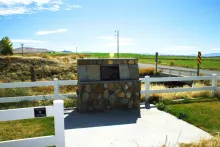
The stone Parting of the Ways monument stands beside Yale Road west of American Falls.

West of me, the Snake River once said goodbye to half the wagons that followed it. For mile after mile from Fort Hall, Oregon-bound and California-bound emigrants traveled together along my river's south bank, one road serving two futures. Then, where the Raft River meets the Snake, the road forked at the place emigrants called the Parting of the Ways. Those bound for Oregon kept on beside the Snake, while those bound for California turned southwest up the Raft River toward the City of Rocks and the Humboldt.
  • Read more about Parting of the Ways: Where the Wagons Said Goodbye to the Snake

The Michaud Flats Project: Water That Needed a Lift

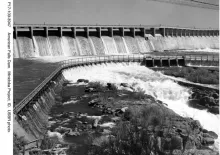
Historic Bureau of Reclamation photograph of American Falls Dam spilling on the Snake River.

Not all of my water flows downhill on its own. Just south and east of me, across the Snake River, the Michaud Flats sat close to the river yet too high and too dry for gravity irrigation, a strip of land about eighteen miles long and three to four miles wide named for Michaud LaClaire, a French scout for the Hudson's Bay Company who traded in this country. The flats needed a lift, and in the 1950s the Bureau of Reclamation finally built one.

  • Read more about The Michaud Flats Project: Water That Needed a Lift

The Warwas House: A Teacher's Bungalow With Two Addresses

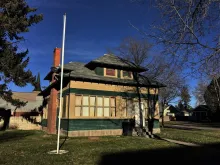
The Warwas House, a Craftsman bungalow, stands at 275 Polk Street in American Falls.

Some houses in American Falls have had two addresses in their lives, and the Warwas House may be the best documented of them all. The Craftsman bungalow was built around 1914 in the Riverside Addition, down in the original townsite, where high school teacher Richard Warwas lived with his wife, Winnie, and their two daughters. It was an ordinary teacher's home on an ordinary street, and nothing about it suggested that the federal government would one day buy it, advertise it, and roll it uphill.

  • Read more about The Warwas House: A Teacher's Bungalow With Two Addresses

A Town on the Move: Visiting the Story of 1925 in American Falls

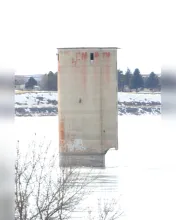
The Oneida grain elevator rises from the frozen American Falls Reservoir over the old townsite.

On November 12, 2026, I shared a morning invitation to come and see the strangest and proudest thing my town ever did, and it is worth telling in full. In 1925, when construction began on the first American Falls Dam, the entire town of American Falls picked itself up and moved to higher ground in what was then the largest government relocation project of its time.

  • Read more about A Town on the Move: Visiting the Story of 1925 in American Falls

The Fort Hall Bottoms: A Homeland Beside My River

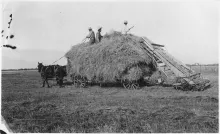
Workers gather hay with a horse-drawn wagon in the Fort Hall Bottoms along the Snake River.

Long before my gates rose across the Snake River, the broad river bottomland northeast of me was already a homeland. The Fort Hall Bottoms, where the Portneuf River and spring creeks spread across the floodplain below the Blackfoot River, gave the Shoshone and Bannock peoples fish, waterfowl, roots, berries, and winter shelter.

  • Read more about The Fort Hall Bottoms: A Homeland Beside My River

The River That Named a Town: Falls, Ferries, and Crossings at American Falls

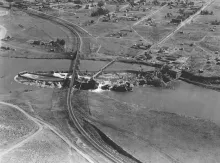
A 1923 aerial photograph looking southeast across the Snake River at American Falls, Idaho, showing the basalt falls, the railroad bridge, and the early power plants.

Long before I held this river back, the Snake River did its own dramatic work here. Squeezed through a narrow bottleneck of black basalt, the river fell about fifty feet in a series of stair-step cascades, dropping six to ten feet at a time over the jointed rock. The thunder of the falls could be heard for miles across the sagebrush plain, and for everyone traveling west, that sound was a promise: you were getting close to American Falls.

  • Read more about The River That Named a Town: Falls, Ferries, and Crossings at American Falls

Local Spotlight: Massacre Rocks State Park, Open All Winter Down the River

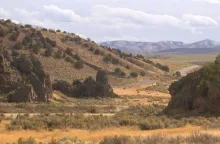
Devil's Gate and the basalt boulders at Massacre Rocks State Park west of American Falls, Idaho.

Good morning from the dam. Ten miles west of town, where the Snake River bends past dark basalt boulders, Massacre Rocks State Park is settling into its quiet season, and that is exactly why this is a fine time to visit. The park is open year-round, and on a cold, bright Monday like today it offers the river, the rocks, and the Oregon Trail without the summer crowds.

  • Read more about Local Spotlight: Massacre Rocks State Park, Open All Winter Down the River

Living History at My Shoreline: A Working Reservoir, Still Making History

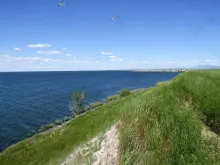
A photograph shows the blue water and grassy shoreline of American Falls Reservoir under a clear sky.

Living history is not only under my water. It is also at my shoreline, where people fish, launch boats, watch birds, and work with the same reservoir that changed this valley a century ago. The townsite, the railroad bridge, and the old roads may lie beneath the surface, but the history of American Falls Reservoir is still being written every season by the families who use it.

  • Read more about Living History at My Shoreline: A Working Reservoir, Still Making History

The Day My Cornerstone Was Sealed: Building the First Dam, 1925 to 1927

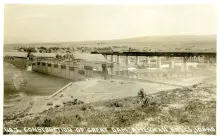
A historic photograph shows the first American Falls Dam under construction, with the railroad bridge in the background.

I remember the day my cornerstone was sealed. The work had begun months earlier, when Utah Construction Company won the contract to build the first American Falls Dam with a bid of 1,936,000 dollars, accepted on October 16, 1924. The first dirt moved on March 10, 1925, and through that spring and summer the riverbank at American Falls became one of the largest construction sites in Idaho, as crews prepared to hold back the Snake River for the Bureau of Reclamation's Minidoka Project.

  • Read more about The Day My Cornerstone Was Sealed: Building the First Dam, 1925 to 1927

The Hospital That Could Not Move: Bethany's Story in the Town Relocation

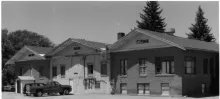
A black-and-white photograph shows the brick Bethany Deaconess Hospital building in American Falls.

Some buildings could not make the move. When American Falls relocated to higher ground in 1925 and 1926, houses, churches, stores, and even hotels were hauled uphill on rollers and tractors, but the old Bethany Hospital stayed behind. It was a three-story stone building dating to 1913, solidly built in the old town, and it could not be dismantled and moved. It stood directly in the path of the coming reservoir.

  • Read more about The Hospital That Could Not Move: Bethany's Story in the Town Relocation

Pagination

  • First page « First
  • Previous page ‹‹
  • Page 1
  • Page 2
  • Page 3
  • Current page 4
  • Page 5
  • Page 6
  • Page 7
  • Next page ››
  • Last page Last »

Get the American Falls Dam App

American Falls Dam

Get the free American Falls Dam app for Android — articles, webcams, weather, and events.

Download the free app

Copyright © 2026 Rocky Mountain Madman LLC - All rights reserved

Developed and Designed by Rocky Mountain Madman LLC