
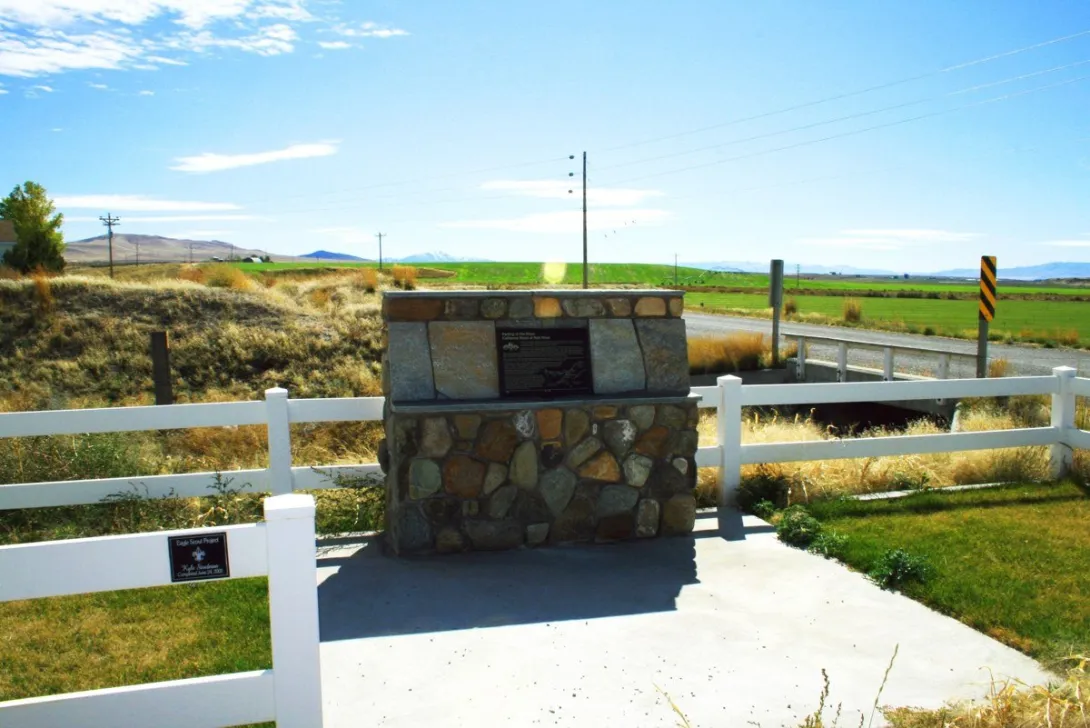
West of me, the Snake River once said goodbye to half the wagons that followed it. For mile after mile from Fort Hall, Oregon-bound and California-bound emigrants traveled together along my river's south bank, one road serving two futures. Then, where the Raft River meets the Snake, the road forked at the place emigrants called the Parting of the Ways. Those bound for Oregon kept on beside the Snake, while those bound for California turned southwest up the Raft River toward the City of Rocks and the Humboldt.
The National Park Service calls the Raft River crossing one of the last major decision points on the combined Oregon-California Trail, and diaries make the moment human. Margaret A. Frink recorded the choice on July 15, 1850, noting that her party took the left-hand road toward California and left the Snake River behind. Families who had shared dust, river crossings, and campfires for a thousand miles shook hands here and, in many cases, never saw one another again. The fork in the road was also a fork in lives.
The ground still tells the story, with care. A stone monument commemorating the junction stands along Yale Road, about 1.6 miles south of Interstate 86 Exit 15. The original junction itself lies about half a mile southwest of the monument on private land, where wagon ruts remain visible, and it can be reached only with the landowners' permission. The monument is the public place to stand, read, and imagine the dust of 1850; the ruts beyond it are a reminder to admire this history respectfully and from the right side of the fence.
I am a twentieth-century creature of concrete and gates, but the river I hold was a highway long before I stood in it. Every wagon that passed the Raft River junction was betting a family's whole future on a direction. When you stop at that monument west of American Falls, you are standing at one of the great crossroads of the American West, and my river runs through the middle of it.
