
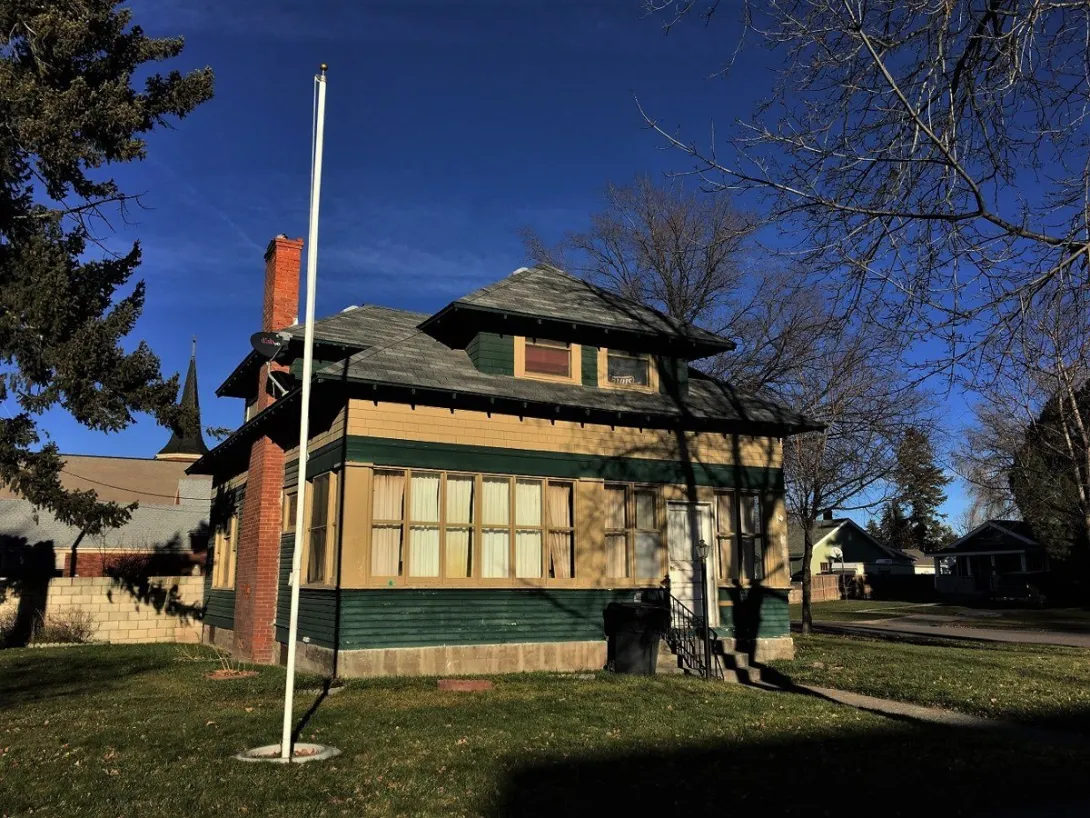
Some houses in American Falls have had two addresses in their lives, and the Warwas House may be the best documented of them all. The Craftsman bungalow was built around 1914 in the Riverside Addition, down in the original townsite, where high school teacher Richard Warwas lived with his wife, Winnie, and their two daughters. It was an ordinary teacher's home on an ordinary street, and nothing about it suggested that the federal government would one day buy it, advertise it, and roll it uphill.
Winnie Warwas died in 1921, and Richard sold the house to the Bureau of Reclamation as my reservoir project gathered force. On April 3, 1924, the house was advertised as one of the first homes offered in the government's salvage sale, priced at 1,710 dollars. Grace Cronkite bought it, and the Bureau moved it to 275 Polk Street in the new townsite, where it still stands today. The National Register nomination treats 1924 and 1925, the sale and the move, as the heart of the house's significance.
That is exactly why the house matters. The Warwas House was listed on the National Register of Historic Places on August 31, 2006, as part of the American Falls Relocated Townsite listings, not because a famous person lived there, but because its journey is the town's journey in miniature. Thousands of relocation stories were never written down house by house. This one was, complete with a teacher, a sale price, a buyer, and a new address.
You can still walk past it on Polk Street, a handsome bungalow with its wide eaves and river-rock era charm, looking for all the world as if it had always been there. It has not. It came up the hill because my water was coming, and it has spent a century since then quietly proving that a town is not its ground. A town is its people, and sometimes its houses, carried along with them.
