
Why is this county called Power County? The answer begins at the falls beside me, a full generation before my dam ever rose. In July 1902, the Island Power Plant began turning the Snake River's fall into electricity on a small island in the river, and its transformers stepped that power up to 33,500 volts for the roughly 25-mile trip to Pocatello. In the first era of long-distance electric transmission in Idaho, that was a remarkable distance for power to travel, and it announced that these falls were more than a landmark. They were an engine.
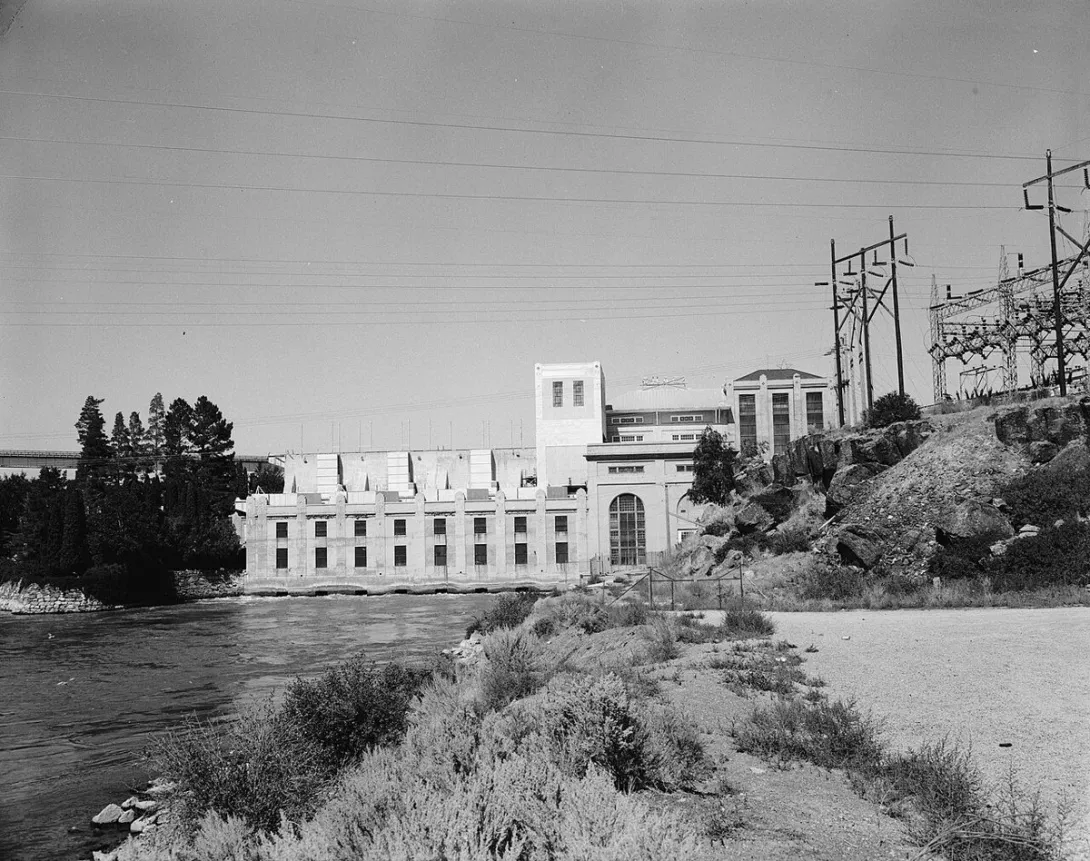
The island station was only the beginning. The East Shore station, the big concrete powerhouse in the photograph that accompanied the original post, joined it in stages built between 1905 and 1913, and a west shore station served the Minidoka country as well. Together the plants at American Falls lit homes, ran machinery, and pumped irrigation water across a growing region. When Idaho Power Company was organized and purchased the American Falls plants on July 13, 1916, it inherited one of the pioneer hydroelectric operations on the Snake River.
So when the Idaho Legislature created a new county on January 30, 1913, carving it from portions of its neighbors and making American Falls the county seat, the name chose itself. The county was called Power, for the hydroelectric development at American Falls. The Idaho State Historical Society's own historical sketch of the county says it plainly: the name was given because of the hydro-electrical development at the falls in the Snake River.
I take a quiet pride in that sequence of events. People sometimes assume the county took its name from me, from the great dam and the powerhouse that came later. The truth runs the other way. Power was being made at these falls in 1902, the county was named for it in 1913, and my first concrete did not rise until 1925. The falls taught this country what falling water could do, and the county has carried the lesson in its name ever since.
Next time you cross the courthouse square in American Falls, remember that the name on the building is a piece of engineering history. Power County is not named for size, or wealth, or political influence. It is named for a river, a fall of about fifty feet, and the people who first thought to turn that fall into light for a city twenty-five miles away.
