
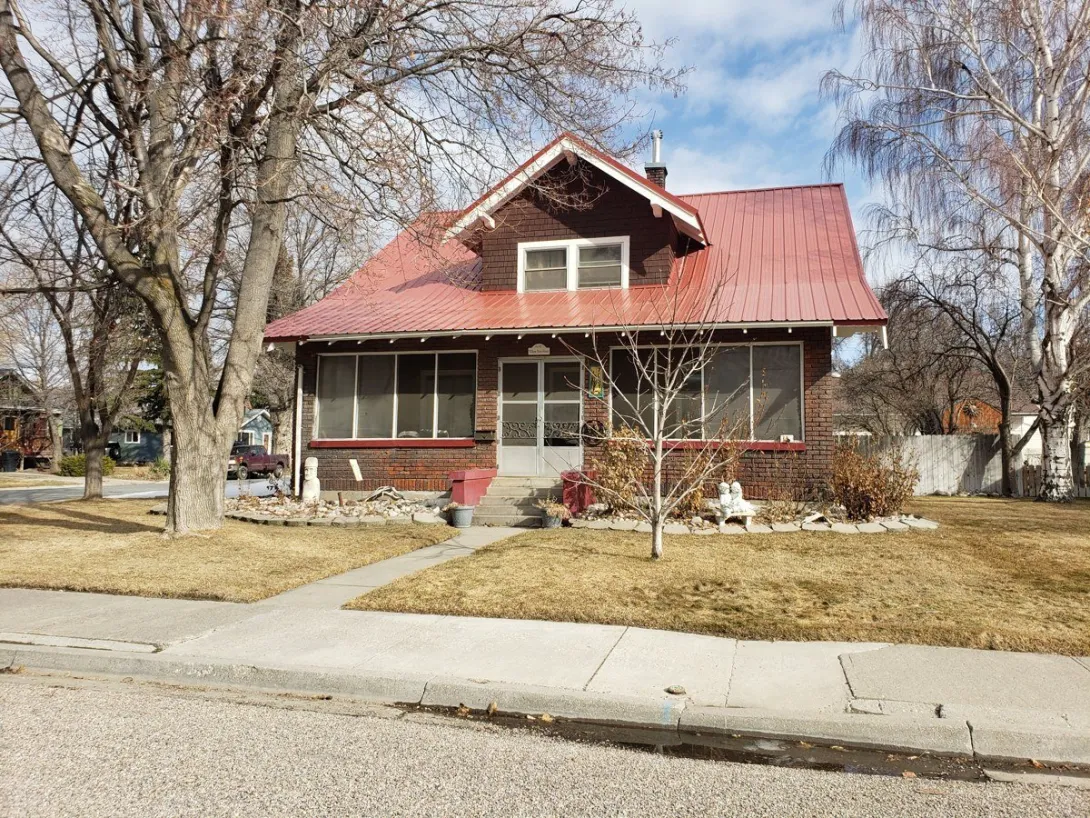
One house tells our whole moving story. The William Davie House is a one-and-a-half-story home in the Bungalow and Craftsman styles, built sometime between 1911 and 1918, and it first stood on 5th Street in the old townsite, in the years when American Falls still believed its streets would stay dry forever.
Then I was authorized, and every building in the old town had to be judged: move it, salvage it, or leave it to my reservoir. In April 1924, the Davie House's old block was listed in a salvage sale in the American Falls Press. The house itself was worth saving. In June 1925, William Davie had the house and its garage moved to 703 Hutchinson Avenue, at the corner of Polk Street, on the higher ground of the new townsite, as my reservoir rose behind the old town.
Moving a house in 1925 was slow, physical work. Buildings were raised, set on timbers and rollers, and hauled by teams and tractors through streets that were themselves being abandoned. Families watched their front doors travel. The Davie House made that journey whole, and it did what the best of the moved buildings did: it simply went on being a home, at a new address, as if the move were an interruption rather than an ending.
The wider relocation ran from January 22, 1925, to July 29, 1926, and it remains the defining act of this town. Churches, businesses, the courthouse functions, and hundreds of residents shifted uphill ahead of the water. Some buildings could not make the move and were lost, which is why each survivor carries more than its own history. Each one is evidence that the town chose to persist.
The house still stands at 703 Hutchinson Avenue today, and on April 2, 2008, it was listed on the National Register of Historic Places as the Harms House, the name of a later chapter in its life. Drive past it on a quiet afternoon and you are looking at both addresses at once: a Craftsman bungalow from old American Falls, keeping its second home on higher ground.
