
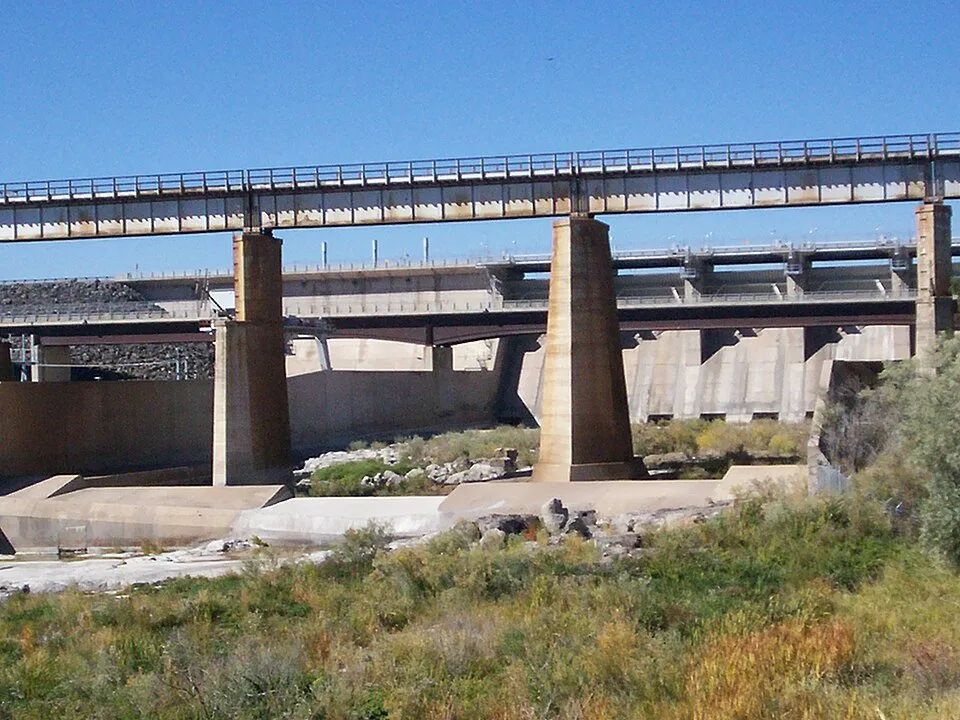
Good morning from the dam. Late November is refill season here, and the water behind me is coming back. Bureau of Reclamation Hydromet readings early on Tuesday, November 24 put American Falls Reservoir at 4,325.68 feet with 434,705 acre-feet in storage, about 26 percent of its 1,671,300 acre-foot capacity. That is a steady climb from 250,074 acre-feet on October 31 and 348,447 acre-feet on November 12, after the Upper Snake system ended the irrigation season with a physical carryover of 614,815 acre-feet on October 31, the second lowest of the past 30 years according to Water District 1.
The day itself is a cold, bright one for a walk by the water. American Falls started Tuesday clear and near 28 degrees, on the way to a mostly sunny high of about 43 degrees and a low near 23 degrees, with southeast winds and sunset at 5:01 p.m. Wednesday is expected to turn cloudy, with a high near 41 degrees and a low near 25 degrees. Dress for winter on the shoreline, watch for frosty ground in the morning, and remember that low water still leaves wide, muddy margins in places where the reservoir pulled back this fall.
For anglers, this is a rebuilding season, and Idaho Fish and Game is saying so plainly. The reservoir was drawn down to just 3 percent of capacity at its low point, and the department expects fewer and smaller trout in 2026 until conditions improve. The response has been heavy stocking. Crews planted 221,549 triploid rainbow trout fingerlings on October 28, 29, and 30, and Fish and Game highlighted 42,000 catchable rainbows for American Falls in its November stocking plan, the largest single plant in the state that month, pointing anglers to shoreline fishing near the West Side Boat Ramp by the dam. State stocking records also show 10,645 triploid rainbows added on November 18, and Idaho Power released 8,000 larger rainbows, about 14 to 16 inches, at the McTucker Creek access upstream of the reservoir on November 10.
There is science on the water this month as well. Fish and Game plans late-November electrofishing on the Snake River between the dam and the Pipeline Access to tag more fish and check the population, and anglers who catch a tagged hatchery rainbow are asked to report the tag number and capture details through the department's Tag You're It program. The reservoir's regular residents are still here too, including rainbow, brown, and cutthroat trout, smallmouth and largemouth bass, and yellow perch, and the department lists a bass limit of two, any size, for this water.
Birds tell the same seasonal story. The wetlands and ponds near the reservoir are used by more than 100 species of birds, including wintering and migrating trumpeter swans, and the northeastern corner known as the Bottoms draws waterfowl and shorebirds through the cold months. It is a good week to bring binoculars along with a fishing rod, bundle up against that southeast wind, and watch a reservoir that ended the season low begin, acre-foot by acre-foot, to fill again.
